Joanna Tomanek — IN ATTUNEMENT
Joanna Tomanek sitting at a wooden table by a window, holding a cup

Meet the practitioner

Joanna Tomanek

I'm interested in the relationship between body, emotions, personal experience and human connection — and in creating spaces where people can explore these with curiosity rather than judgement.

My path

My professional path did not follow a single straight line. It led through different fields of knowledge, educational projects, group work and a search for a deeper understanding of human beings.

By education I hold Master's degrees in Cognitive Science, Economics, and Informatics and Econometrics, and I also completed doctoral studies in Statistics. The diversity of these experiences taught me to look at reality from many perspectives — noticing both underlying patterns and relationships, and the complexity of human experience.

Cognitive science in particular awakened my interest in how the brain works, how our thoughts, beliefs and ways of interpreting the world are formed. Over time I became increasingly interested in how cognitive processes connect with emotions, the body and relationships.

Working with people became an important part of my path. For years I participated in international educational projects, led workshops, worked with theatre groups and young people, and co-created dialogue circles and shared learning spaces. These experiences allowed me to meet a wide variety of human perspectives and discover how much can happen in relationship when there is space for an authentic encounter.

Empathic communication, Nonviolent Communication (NVC) and Sarah Peyton's approach — grounded in relational neurobiology and the language of resonance — became a particularly important direction for me. I completed the Practitioner of Resonant Healing program and continue developing my competencies in working with relationality and emotional experience.

My interests also expanded to include work with the body, the nervous system and self-regulation processes. I completed EEG Biofeedback Therapist training and continue developing my knowledge in neurotherapy and somatic approaches. A systemic perspective is also important to me, helping me see a person in the context of their relationships, history and environment.

Over time I began to see more and more clearly that all these areas share a common thread: an interest in what helps a person understand themselves better, stay in contact with their own experience and build more conscious relationships.

That is how IN ATTUNEMENT – Body · Emotions · Presence came to be.

It is a space where my knowledge, experience and conviction meet: we do not have to fix ourselves or squeeze into ready-made moulds. We can learn to understand our own experiences, discover our resources and find a more personal way of being with ourselves and others.

What I bring to sessions

In meeting another person, both presence and understanding what may be happening beneath the surface of spoken words matter to me.

I do not assume I know the answers to someone else's questions. Instead of ready-made interpretations, I offer curiosity, looking at experiences together and searching for meanings that ring true for that person.

I bring an interdisciplinary perspective. Knowledge from cognitive science, relational neurobiology and systemic approaches helps me notice connections between body, emotions, thoughts, personal history and relationships. I do not treat them as separate areas — I am interested in how they influence one another.

Attunement, warmth and precision matter to me: the intention of being alongside another person with curiosity, empathy and without judgement.

I take care that our meetings respect the boundaries, needs and autonomy of the person I work with. I do not expect disclosure or sharing of experiences someone is not ready for. I respect the right to pause, decline or change the direction of the conversation.

I do not come with a ready-made recipe for someone's life. I accompany you in discovering your own resources, possibilities and perspectives. I believe every person carries their own history, pace and self-knowledge that deserve respect.

I create a space where you can slow down, feel heard and look with greater gentleness at what matters right now.

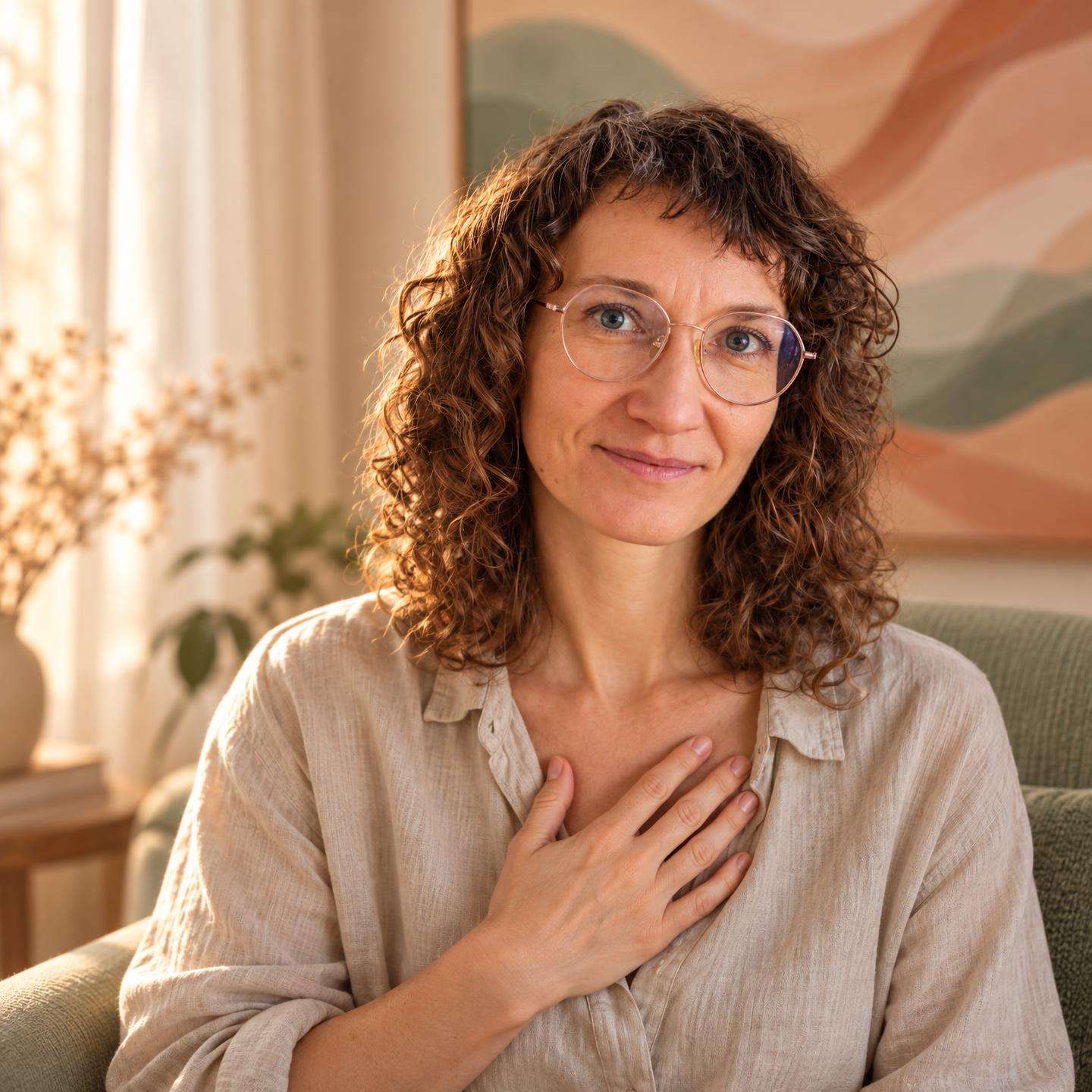
Joanna Tomanek with her hand resting on her chest

Qualifications & training

Professional background

Formal qualifications, completed training and courses attended are listed separately, so it is clear what each one is.

I am not a psychologist or psychotherapist. My work is individual support and personal development — not psychotherapy or medical treatment.

Professional qualification

  • Occupational Therapy

    Professional Qualification MED.13 – Occupational Therapy, Poland

Academic education

  • Cognitive Science

    Master's Degree in Cognitive Science · University of Silesia in Katowice, Poland

  • Statistics

    Doctoral Studies in Statistics · University of Economics in Katowice, Poland

  • Informatics and Econometrics

    Master's Degree in Informatics and Econometrics · University of Economics in Katowice, Poland

  • Economics

    Master's Degree in Economics · University of Economics in Katowice, Poland

Certifications

  • Deep Brain Reorienting (DBR), Level 2

    Frank Corrigan · EEG Education & Research (EEGER)

  • EEG Biofeedback Therapist

    Ksenia Cielebąk · Ośrodek Kształcenia Medycznego AKSON

  • The Practitioner of Resonant Healing Certification Program

    Sarah Peyton

  • The Resonant Field Constellations Certification Program

    Sarah Peyton

  • Needs Based Coaching

    Pernille Plantener · BusinessByHeart

Further courses attended

Courses I have attended as continuing education. These are not professional certifications.

Neurofeedback, biofeedback and neurotherapy

  • Individualised Protocols for Trauma Treatment: Integrating Assessment, Biofeedback and Neurofeedback

    Dr Mitchell Sadar and Dr Angelika Sadar

  • Wykorzystanie EEG i QEEG w neuroterapii klinicznej: od diagnostyki wstępnej do planowania spersonalizowanej terapii neurofeedback

    Dr Piotr Sobaniec and Dr Milena Żochowska-Sobaniec

  • Integrating the Whole Brain Training (WBT) Approach in Clinical Practice and Peak Performance

    Dr Aida Ivan, Peter VanDeusen and Zvigidiz Chenman

  • Preventing and Treating Pain, Particularly in Pediatric Patients, Using Biofeedback

    Dr Katie Fleischman and Dr Richard Harvey

  • Zwiększanie poczucia bezpieczeństwa w ciele: Integracja metody Somatic Experiencing i HRV Biofeedbacku w regulacji układu nerwowego

    Dr Kamila Froń-Malinowska

Trauma therapy and PTSD

  • EMDR from Start to Finish: The Complete Foundational Training for Treating PTSD and Complex Trauma

    Arielle Schwartz, PhD, CCTP-II, E-RYT, EMDR-C

  • EMDR & Parts Work for Treating Complex Trauma: Somatic Techniques to Decrease Defensiveness and Facilitate Trauma Processing

    Arielle Schwartz, PhD, CCTP-II, E-RYT, EMDR-C

  • Brainspotting 2-Day Workshop with David Grand: Integrating the Neuroexperiential Model for Rapid Trauma Healing

    David Grand, PhD

  • Individualised Protocols for Trauma Treatment: Integrating Assessment, Biofeedback and Neurofeedback

    Dr Mitchell Sadar and Dr Angelika Sadar

Somatic therapy and nervous system regulation

  • Zwiększanie poczucia bezpieczeństwa w ciele: Integracja metody Somatic Experiencing i HRV Biofeedbacku w regulacji układu nerwowego

    Dr Kamila Froń-Malinowska

  • Somatic Therapy for Treating Intimate Relationships: Healing disconnection, betrayal, trauma, and more through the body

    Deborah J Fox, MSW

  • EMDR & Parts Work for Treating Complex Trauma: Somatic Techniques to Decrease Defensiveness and Facilitate Trauma Processing

    Arielle Schwartz, PhD, CCTP-II, E-RYT, EMDR-C

IFS therapy and parts work

  • Comprehensive Internal Family Systems Therapy Course: A Step-by-Step Guide Through Clinical Applications of the IFS Model

    Frank Anderson, MD

  • 2-Day Intensive Workshop: Treating Complex Trauma with Internal Family Systems (IFS) Therapy

    Frank Anderson, MD

  • EMDR & Parts Work for Treating Complex Trauma: Somatic Techniques to Decrease Defensiveness and Facilitate Trauma Processing

    Arielle Schwartz, PhD, CCTP-II, E-RYT, EMDR-C

ADHD, neurodiversity and executive functions

  • Rethinking ADHD with Gabor Mate and Terry Matlen: From Origins to Healing

    Gabor Maté, M.D., Terry Matlen, MSW

  • Neurodiversity in Women – Therapeutic Strategies for Empowering Women with Autism or ADHD

    Jennifer Gerlach, LCSW

  • Treating Adult ADHD: Help Smart but Scattered Clients Strengthen Executive Skills & Daily Functioning

    Margaret Dawson, EdD, NCSP

Emotional regulation and DBT

  • DBT Crash Course for Clinicians: 15 Core Techniques to Improve Emotional Regulation, Manage Distress and More

    Alexa Mulee, LMHC, C-DBT

Sex and couples therapy

  • Integrative Sex and Couples Certification Training with Tammy Nelson: Certified Sex Therapy Informed Professional (CSTIP) Course

    Tammy Nelson, PhD

  • Somatic Therapy for Treating Intimate Relationships: Healing disconnection, betrayal, trauma, and more through the body

    Deborah J Fox, MSW

Personal development, ritual work and therapeutic practice

  • Letnia Szkoła Projektowania Rytuałów

    Anja Franczak and Marta Tarnowska

Foundations

What guides this work

Attunement

I look for attentiveness to what is happening within a person and between people. I am interested in finding contact with oneself — with the body, emotions, needs and lived experience. Attunement does not mean adapting to others, but developing sensitivity to yourself and the world around you.

Warmth

Kindness, gentleness and acceptance of human complexity matter to me. I do not assume every experience needs to be immediately changed, explained or solved. Sometimes the first step is simply being able to stay with what is.

Precision

I value care with language, meaning and nuance. I try to distinguish observations from interpretations, knowledge from assumptions, and what I know from what I do not yet know. Precision helps me avoid oversimplifying human experience or imposing ready-made explanations.

Culture of consent

I respect autonomy, boundaries and the right to decide for yourself. Consent is more than a one-time permission — it is ongoing care for comfort, readiness and the freedom to change your mind, in conversation as well as in any proposed exercises or practices.

Knowledge

I ground my work in cognitive science, relational neurobiology, cognitive processes, empathic communication and systemic approaches. Ongoing learning, critical thinking and weaving different perspectives together without oversimplification matter to me.

Experience

I complement knowledge with experience working with people, groups and diverse educational processes. I draw from workshop practice, dialogue facilitation, work with body and emotions, and my own path of growth — treating experience as a source of reflection, never a universal template for others.

Values

Values present in my work

Presence

Being attentive to what is happening here and now, without rushing towards conclusions.

Authenticity

Respecting individual experiences, differences, boundaries and personal ways of being.

Curiosity

Approaching human experience with openness rather than assumptions.

Integration

Recognising connections between body, emotions, thoughts, experiences and relationships.

Agency

Supporting people in discovering their own resources, capacities and possibilities.

Connection

Recognising the importance of relationships, reciprocity and belonging.

Professional responsibility

Working within actual competencies, communicating limitations honestly and respecting autonomy.

Book an Initial Session

Begin with what matters to you.

You don't need to know exactly what you need. We can begin with a conversation and explore what kind of support might be helpful.

Book an Initial SessionOnline and in person in Katowice, Poland · English and Polish